A transformer quotation that lists only kVA, voltage and delivery time leaves the contractor to resolve design, utility approval, protection and installation risks later. By the end, you will know what a supplier should verify before manufacture, which technical documents to demand, and how to compare suppliers for a New Delhi project.
Key takeaways
- Verify the single-line diagram, load schedule, DISCOM voltage and installation conditions before quoting.
- Compare kVA rating, voltage ratio, impedance, losses, taps, insulation and test requirements.
- Match transformer capacity and protection to the site load, cables, earthing and LT panel.
- Assess drawings, testing, delivery coordination and after-sales response before selecting a supplier.
What should a supplier verify before quoting a transformer?
Before quoting, a distribution transformer supplier must read the single-line diagram, load schedule and site conditions as one system. Confirm the utility or DISCOM voltage level, incoming-cable arrangement, metering position, LT-panel interface, protection scheme, earthing method and intended installation location.
1. Check whether the proposed interface is 11 kV/433 V, 33 kV/433 V or 33 kV/11 kV, then match cable terminations, metering and protection to the approved utility arrangement.
2. Verify the transformer tank and neutral earthing points, cable-screen connections, earth-grid requirements, plinth, cable trench, ventilation, clearances, lifting access and indoor or outdoor exposure before civil work begins.
3. Reconcile the load schedule with lifts, pumps, HVAC drives, UPS systems, LED drivers, EV chargers, battery systems and other nonlinear loads. Ask for the harmonic-current basis, neutral loading, thermal derating, power-factor-correction compatibility and permissible voltage drop.
Calculate the rating from connected load, maximum demand, diversity factor, motor-starting current, power factor and future-load allowance. Adding nameplate loads alone can create an oversized, expensive transformer; selecting only the running load can create voltage sag when motors start.
Require a design-review record showing every assumption, calculation and rejected alternative, not just a kVA figure. This document should expose missing data before transformer supply for contractors proceeds to cable procurement, utility submission or foundation construction. A clear review also gives the contractor evidence for resolving later disputes over loading, heating or voltage performance.
Which technical fields make transformer quotations comparable?
A comparable quotation names every electrical interface, not just kVA. Require the supplier to state:
- Primary and secondary voltages, frequency, phase configuration and vector group
- Percentage impedance, X/R ratio, short-circuit withstand and phase sequence
- Tap-changer type, tap range and step size
- Copper or aluminium windings, cooling method, insulation level and temperature-rise limit
- No-load and load losses at the stated reference temperature
- Neutral arrangement, enclosure or tank construction, accessories and cable-termination details
For conventional outdoor oil-immersed transformers, require compliance with IS 1180 (Part 1):2014, including every amendment number used in the quotation and test plan. “ISI compliant” alone is not a test result. Confirm routine-test reports, guaranteed losses, temperature rise and dielectric-test requirements against that stated edition.
| Choice | Advantages | Site checks |
|---|---|---|
| Oil-immersed | Strong outdoor performance and overload tolerance | Fire risk, bunding, leakage control, oil testing, access and noise |
| Cast-resin dry-type | No liquid leakage and simpler indoor fire management | Ventilation, heat rejection, noise, overload behaviour and access |
Match the interface to the Delhi utility: 11 kV/433 V may be unsuitable where the connection requires 33 kV/433 V or 33 kV/11 kV, different metering or a defined protection scheme. These details matter across distribution transformer applications in New Delhi.
If future paralleling is possible, require matching ratio and tap position, vector group, phase sequence, polarity, impedance, X/R ratio and protection data. Otherwise equal-kVA units can still circulate current or trip incorrectly. A distribution transformer supplier should make these differences visible before price comparison.
How should the transformer match the New Delhi site and its load?
Match the transformer to the site’s operating pattern, not just its connected kVA. For distribution transformer applications in New Delhi, apartment and commercial projects require coordination with lifts, HVAC, fire pumps, common-area loads and tenant diversity; factories must account for motors, furnaces, welders, variable-frequency drives and cyclic loading.
1. Separate hospital essential loads, dependable changeover and UPS systems. For data rooms, specify low-loss operation, harmonic assessment, noise limits and ventilation.
2. Treat sewage plants and construction sites as wet, dusty and access-constrained. Check pump starting, temporary cabling, restricted lifting routes and enclosure protection.
3. For outdoor installation, state ambient-temperature and ventilation assumptions, dust and monsoon protection, corrosion treatment, creepage, clearances, lifting access and safe cable termination. For indoor or basement rooms, calculate heat rejection and airflow, then provide fire separation, drainage, noise control, maintenance clearances and oil bunding or containment where applicable.
4. Freeze tank dimensions, plinth and foundation loads, cable-trench route, removable links, tank and neutral earth points, cable-screen earthing and the approved neutral arrangement before civil work.
| Choice | Strength | Site obligations |
|---|---|---|
| Dry-type | No liquid leakage; simpler indoor fire management | Provide ventilation; check its cost, noise and overload behaviour |
| Oil-filled | Strong outdoor cost and overload performance | Provide leak management, fire arrangements, oil containment and oil testing |
A supplier should also state harmonic-current limits, thermal derating, neutral loading and power-factor-correction compatibility. A load list that only adds nameplates can miss heat and voltage sag.
What must contractors control during tap changing, protection and testing?
Never change an off-circuit tap while the transformer is energised. An OLTC is different: it changes taps under load, but only with coordinated controls, protection and maintenance access.
1. For an off-circuit or no-load tap changer, isolate the transformer, de-energise it, discharge stored energy and secure it against re-energisation. Issue an approved operating procedure showing isolation points, interlocking and clear tap-position indication.
2. For an OLTC, provide a compatible control panel, voltage-sensing arrangement, raise and lower limits, mechanical and electrical interlocks, alarm and trip contacts, maintenance access and a documented inspection plan. Do not assume a standard ±5 percent range; match tap steps to the utility’s declared primary-voltage variation and the project’s allowable secondary-voltage band.
3. Coordinate transformer impedance and short-circuit withstand with the prospective fault level and the ratings of HT fuses, vacuum circuit breakers, relays, LT ACBs and earth-fault protection. Obtain impedance, short-time withstand and peak-current data before finalising settings.
4. As part of transformer supply for contractors, request routine-test evidence before dispatch covering ratio and phase displacement, winding resistance, insulation, no-load current and loss, load loss and impedance, dielectric tests and accessory checks.
5. At site, record insulation resistance or polarisation index, winding resistance, ratio, oil dielectric strength for oil-filled units, earthing continuity, alarm and trip operation, and commissioning results. Retain these records for utility and Electrical Inspector review.
How can you judge whether a supplier will support the project after the quote?
A quote is only a starting point; support is proven by the documents and response ownership that follow it. Ask for these before approving a distribution transformer supplier for electrical contractors in New Delhi:
- GA drawing, nameplate schedule, guaranteed technical particulars, loss schedule and impedance
- Wiring diagram, foundation and lifting data, cable-entry details and accessory list
- Inspection-and-test plan, routine-test reports and type-test evidence where specified
- Warranty terms, exclusions, spare-parts schedule and commissioning procedure
Check whether the supplier has design-review capacity, traceable components, suitable test facilities and manufacturing capacity for the required rating. Require a defined drawing-approval response time and confirm field-service coverage in New Delhi.
| Project risk | Evidence to demand | Responsibility to define |
|---|---|---|
| Transit damage or oil leak | Packing, inspection and transport procedure | Who pays, repairs and reports |
| Abnormal temperature or nuisance trip | Alarm, protection and site-test records | Supplier’s corrective response |
| Failed site test or noise complaint | Acceptance limits and investigation method | Retest, modification and cost |
| Commissioning defect | Signed commissioning procedure | Attendance and handover records |
Sneh Raman Electricals Pvt Ltd should be judged by this same evidence: can it convert project drawings into approved technical documents, coordinated equipment data and commissioning support? Delivery speed cannot replace utility acceptance, Central Electricity Authority safety-regulation submissions, verified test records or a responsibility matrix.
Compare each distribution transformer supplier on interface control and response ownership, not quality language alone.
Related products
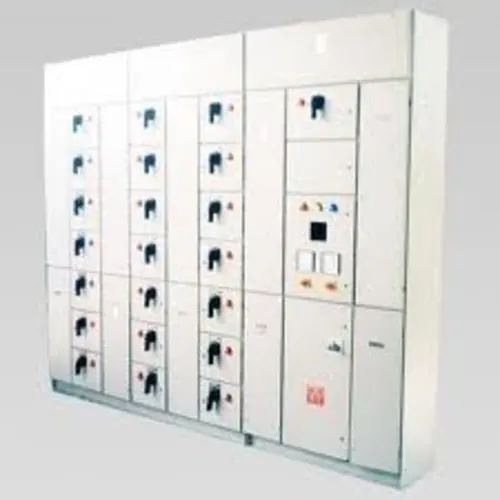
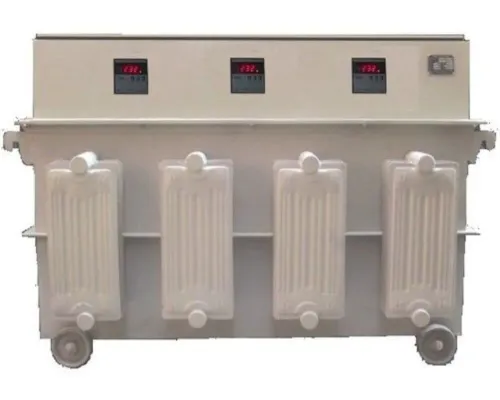
 | ELECTRICAL TRANSFORMER, BOOSTER & REGULATING TRANSFORMER, FURNACE TRANSFORMER, INDRUSTRIAL DISTRIBUTION TRANSFORMER, CONTROL PANEL, VOLTAGE STABILIZER TRANSFORMER & ELECTRICAL PANELS Providing you the best range of Electrical Transformer, Booster & Regulating Transformer, Furnace Transformer and Industrial Distribution Transformer... View product → |
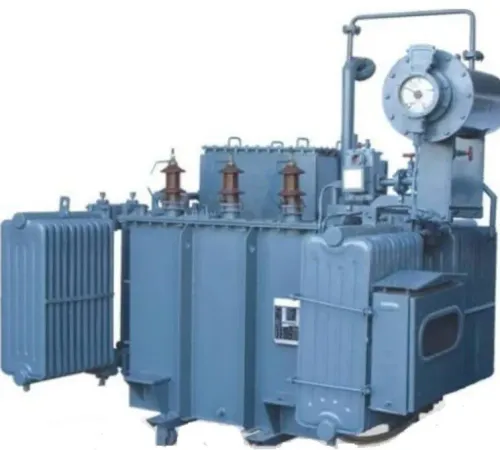
 | Transformer Being one of the renowned firms in the industry, we are involved in providing a high-quality array of OLTC Distribution Transformer. View product → |
Frequently asked questions
What should a supplier verify before quoting a distribution transformer?
Verify the single-line diagram, load schedule, DISCOM voltage, incoming cables, metering position, LT-panel interface, protection, earthing and installation location.
Which technical fields make transformer quotations comparable?
Compare kVA rating, primary and secondary voltage, frequency, vector group, impedance, tap range, losses, insulation level, cooling method and test scope.
How should a transformer match a New Delhi site and its load?
Match the transformer to the calculated demand, diversity, motor starting current, future expansion, ambient conditions, available space, ventilation, cable routes and local utility requirements.
What must contractors control during tap changing, protection and testing?
Confirm the tap-changing method, interlocks, relay settings, earthing, cable termination, routine test reports, insulation resistance, ratio, polarity and commissioning checks.
How can contractors judge supplier support after the quote?
Ask for approved drawings, a manufacturing schedule, inspection access, delivery responsibilities, commissioning support, warranty terms, spares and a named service contact.