A distribution transformer for a New Delhi factory, data centre, warehouse, or construction site must match the network voltage, fault level, load profile, environment, and protection system—not just a catalogue kVA rating. By the end, you will be able to size the transformer, choose the right construction and tap-changing method, write a usable specification, and compare manufacturer submissions.
Key takeaways
- Size transformers using demand, diversity, motor starting, and future expansion.
- Choose oil-immersed or dry-type units based on fire risk, space, and maintenance access.
- Issue ratings, impedance, vector group, protection, testing, and installation details with the tender.
- Verify manufacturing capability, test records, service coverage, and delivery commitments before award.
Where distribution-project transformers are used in New Delhi
Factories, warehouses, commercial complexes, data centres, metro works, hospitals, and construction sites all have industrial transformer applications in New Delhi. The correct installation depends on indoor space, fire risk, feeder arrangement, load criticality, and whether the supply is permanent or temporary.
| Application | Installation form | What changes at the site |
|---|---|---|
| Factory or warehouse | Outdoor plinth-mounted oil-immersed unit or packaged substation | Provide bunding, fencing, surge arresters, earthing, and cable trenches; allow access for oil handling and lifting |
| Commercial complex or hospital | Indoor dry-type transformer | Use a fire-rated room, forced or natural ventilation, anti-condensation control, fire detection, and short cable runs |
| Data centre | Indoor dry-type or segregated packaged substation | Coordinate dual incomers, low-impedance busways, neutral earthing, harmonic heating, and redundant protection |
| Large infrastructure site | Oil-immersed substation transformer feeding several feeders | Engineer busbars, relay coordination, fault withstand, transformer differential protection, and multiple outgoing cable terminations |
| Temporary construction supply | Skid-mounted or mobile transformer | Provide weatherproof enclosure, quick-connect cables, mechanical protection, temporary earthing, and relocation access |
Distribution project transformers in New Delhi face summer heat, dust, pollution, and monsoon moisture. Check enclosure ventilation, creepage distances, corrosion protection, declared ambient temperature, and temperature rise rather than relying on the nameplate kVA alone.
Specify the primary and secondary voltage, fault level, vector group, neutral-earthing method, impedance, insulation level, and surge-arrester coordination. A de-energized tap changer cannot regulate a live feeder; choose an OLTC only when voltage variation or network-control requirements justify its added controls, maintenance, and protection.
How to calculate transformer capacity beyond connected load
A 1,000 kW site operating at 0.85 power factor requires 1,176 kVA before motor starting, harmonics, voltage drop, or expansion are considered. Select the transformer from coincident maximum demand, not the arithmetic total of every connected nameplate.
1. Build a load schedule showing running kW, power factor, operating hours, and starting method. Apply realistic demand and diversity to obtain the maximum simultaneous kW, then convert it with kVA = kW ÷ power factor.
2. Model the largest motor start and other abrupt loads. Check locked-rotor current, starting sequence, transformer impedance, and allowable bus-voltage dip; excessive impedance reduces fault current but can prevent a motor from accelerating. A soft starter or variable-speed drive changes this calculation.
3. Identify variable-speed drives, rectifiers, welders, UPS systems, and data equipment. Provide the harmonic-current spectrum to the industrial transformer manufacturer, who must assess winding and stray losses, neutral loading, temperature rise, and resonance with power-factor-correction capacitors. Arithmetic kVA alone can produce overheating or distorted voltage.
4. Add the approved expansion load by phase and commissioning date, rather than an unexplained percentage. Confirm that the selected rating leaves usable kVA after harmonic heating and that feeder voltage remains within the project limit at expected and starting conditions.
5. Compare no-load loss at continuous energisation and load loss at the forecast loading profile. Finally, coordinate impedance, short-circuit withstand, protection settings, and utility fault level; a transformer that passes full-load efficiency can still be uneconomic or unsuitable when lightly loaded.
Choosing oil-immersed, dry-type, OLTC, or specialist transformers
Choose the construction from the installation’s fire consequence and environment; choose voltage control from the network’s voltage variation, not from the transformer’s kVA alone.
| Option | Best fit | Main constraints |
|---|---|---|
| Oil-immersed | Outdoor plinth, pole-mounted, packaged, or large substation transformers | Requires oil containment, fire separation, drainage, and protection against leaks; offers high power density and usually lower first cost. |
| Dry-type cast-resin | Indoor factories, hospitals, metro stations, commercial buildings, and high-occupancy areas | Removes liquid-oil risk but needs ventilation, dust control, thermal clearances, and partial-discharge performance checks. |
| Off-circuit tap changer | Stable utility voltage where adjustment occurs during shutdown | Cannot correct voltage while energised; set the tap before commissioning or after an approved outage. |
| OLTC | Long feeders, multiple distribution feeders, or networks with changing primary voltage | Regulates under load but adds a tap changer drive, controls, interlocks, maintenance, and protection requirements. |
| Specialist transformer | Drives, furnaces, rectifiers, welding, booster duties, or unusual voltage requirements | Requires assessment of harmonics, neutral current, stray loss, starting duty, impedance, and power-quality effects. |
For variable-speed drives, data equipment, rectifiers, or welding loads, ask the industrial transformer manufacturer to calculate harmonic heating, capacitor-resonance risk, and neutral loading. A catalogue kVA rating can overheat when nonlinear current raises winding and stray losses.
For parallel units, specify matching vector group, phase sequence, voltage ratio, tap positions, impedance, and X/R ratio. Indoor oil units need a documented fire strategy; outdoor oil units need bunding and safe clearances. Dry-type does not mean maintenance-free.
The technical specification and protection scheme to issue with the tender
The tender must state primary and secondary voltage, frequency, kVA, phase, vector group, impedance, short-circuit level, neutral-earthing method, tap range and tap-changer type. Specify lightning-impulse withstand, power-frequency withstand, guaranteed no-load and load losses, temperature rise, sound level, permissible harmonics, and parallel-operation requirements.
Require compliance with IS 2026 or IEC 60076 and the utility’s approved loss schedule.
For distribution project transformers in New Delhi, include these project-specific requirements:
- Ambient temperature, humidity, altitude, pollution level, seismic design basis, installation altitude, ventilation, and indoor or outdoor service.
- Oil type and volume, conservator or sealed construction, fire separation, bund capacity, corrosion protection, enclosure IP rating, and dry-type resin or temperature class where applicable.
- Overall dimensions, mass, centre of gravity, lifting lugs, jacking points, transport limits, radiator removal, foundation loads, clearances, and cable-box or busduct interfaces.
- HV and LV terminal positions, cable sizes, gland plates, neutral and earth terminals, phase sequence, relay wiring, marshalling-box requirements, and SCADA communication points.
State whether protection uses HV fuses or a breaker, surge arresters, LV ACBs, overcurrent and earth-fault relays, temperature alarm/trip, Buchholz and pressure devices, differential protection, or restricted-earth-fault protection. Give CT ratios, classes, locations, trip logic, interlocks and withstand ratings. Require drawings, routine-test certificates, guaranteed deviations and a complete protection-coordination study.
How to evaluate an industrial transformer manufacturer before award
Award the contract only after the industrial transformer manufacturer proves the specified unit, interfaces, and site performance—not merely its kVA nameplate. Require guaranteed no-load and load losses at the project loading profile, impedance tolerance, temperature rise, sound level, voltage ratio, and OLTC or off-circuit tap range.
Ask for these award documents and checks:
- Routine test reports for ratio, polarity and phase displacement, winding resistance, insulation resistance, applied-voltage withstand, induced-voltage withstand, and no-load and load losses.
- Type or special-test evidence for short-circuit withstand, temperature rise, impulse withstand, and sound level when the specification or utility requires it.
- A signed deviation schedule covering every exception, not a statement that the offer “conforms”.
- GA drawings showing dimensions, mass, radiators, lifting points, cable boxes, busbar positions, neutral terminal, earthing pads, fire separation, and maintenance clearances.
| Check | Suitable manufacturer | Nominal-rating supplier |
|---|---|---|
| Electrical fit | Matches fault level, vector group, earthing, impedance, taps and utility loss schedule | Quotes kVA and voltage only |
| Control interface | Provides OLTC controller, AVR, interlocks, alarms, trip contacts and SCADA points | Leaves controls for others |
| Site readiness | Verifies summer ambient, dust, monsoon moisture, ventilation, access and foundation | Assumes a catalogue indoor condition |
For an industrial transformer manufacturer for distribution projects in New Delhi, insist on a witnessed pre-delivery inspection and documented installation, oil testing, protection commissioning, and energisation checks. Sneh Raman Electricals Pvt Ltd belongs in the comparison only after it answers those same measurable questions.
Related products
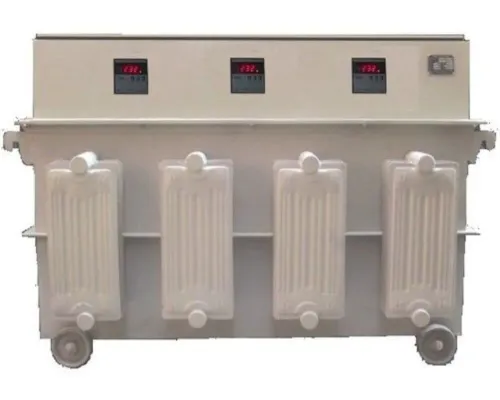
 | ELECTRICAL TRANSFORMER, BOOSTER & REGULATING TRANSFORMER, FURNACE TRANSFORMER, INDRUSTRIAL DISTRIBUTION TRANSFORMER, CONTROL PANEL, VOLTAGE STABILIZER TRANSFORMER & ELECTRICAL PANELS Providing you the best range of Electrical Transformer, Booster & Regulating Transformer, Furnace Transformer and Industrial Distribution Transformer... View product → |
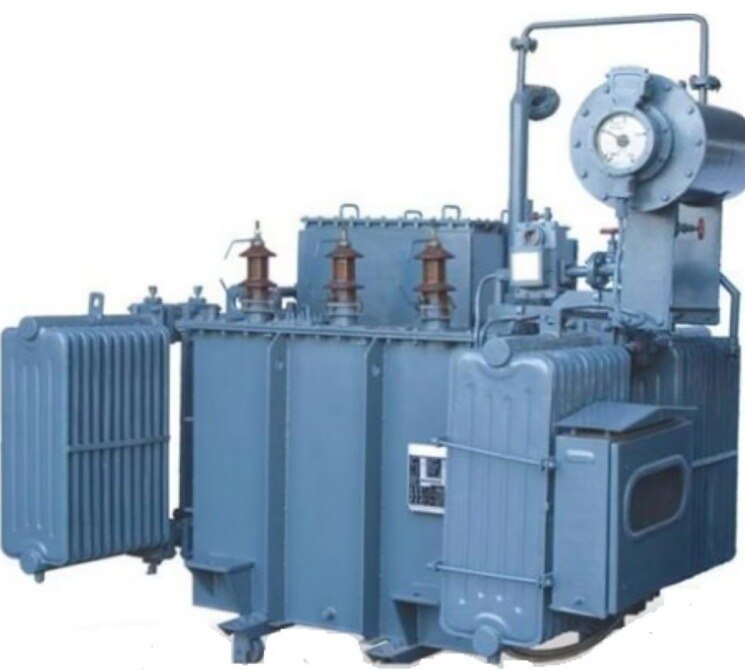
 | Transformer Being one of the renowned firms in the industry, we are involved in providing a high-quality array of OLTC Distribution Transformer. View product → |
Frequently asked questions
Where are distribution-project transformers used in New Delhi?
They supply factories, warehouses, commercial complexes, data centres, metro works, hospitals, and temporary construction sites. Select the installation around indoor space, fire risk, feeder arrangement, load criticality, and whether the supply is permanent.
How do you calculate transformer capacity beyond connected load?
Start with maximum demand rather than adding nameplate ratings. Apply realistic diversity, include motor-starting and non-linear loads, check voltage drop and ambient conditions, and reserve capacity for planned expansion.
How do you choose between oil-immersed and dry-type transformers?
Use oil-immersed units where outdoor space, cooling, and oil containment are manageable. Choose dry-type units for indoor installations where fire risk, ventilation, and spill control make mineral oil unsuitable.
What should a distribution-transformer tender specification include?
State rated power, primary and secondary voltages, frequency, phase, vector group, impedance, tap range, insulation levels, cooling method, enclosure, losses, accessories, protection, routine tests, type tests, drawings, and delivery requirements.
How do you evaluate an industrial transformer manufacturer before award?
Check comparable project references, manufacturing and test facilities, quality records, design calculations, inspection arrangements, warranty terms, spare parts, commissioning support, and the supplier’s ability to meet the required delivery schedule.
Related products
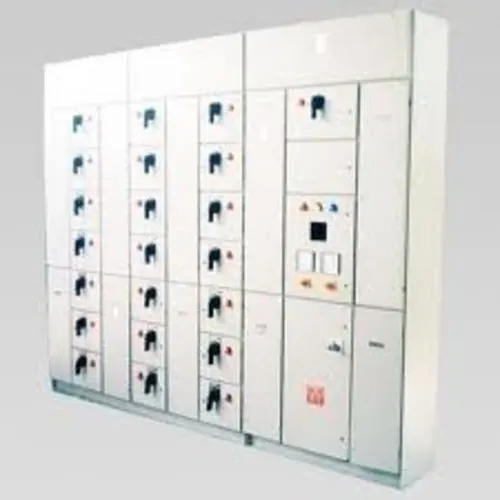
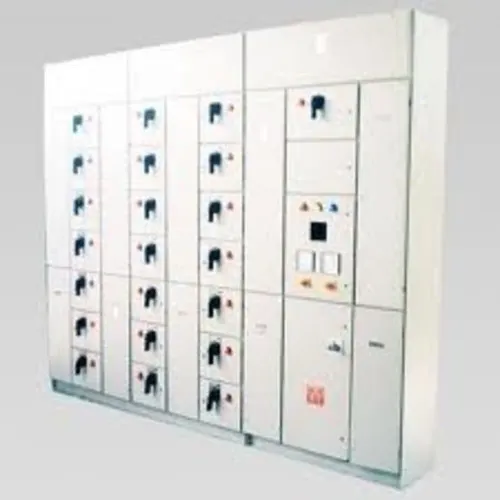
 | Distribution Board We are successfully meeting the varied needs of our patrons by offering a wide gamut of Distribution Board as per their precise needs. View product → |
 | Meter Panel Board 3 - Phase Metering Distribution Panel Being a leader in the industry, we are engaged in offering a qualitative range of Metering Distribution Panel to our customers. View product → |
 | LT Distribution Panel We are successfully meeting the varied requirements of our clients by providing the best quality range of LT Control Panel. View product → |