A panel quotation is incomplete when it lists only the incomer amperage and enclosure size. Before you place an order, define the panel’s job, fault withstand, protection scheme, busbar design, environmental conditions, documents and factory tests so you can compare manufacturers on engineering evidence rather than catalogue language.
Key takeaways
- State voltage, frequency, earthing system, load type and environment in the brief.
- Record continuous current, short-circuit withstand rating and incoming fault level.
- Require protection coordination, metering circuits, busbar separation and enclosure details.
- Request approved drawings, verification records and a witnessed factory acceptance test.
Start with the load and choose the right panel type
Define LT in the purchase brief: IEC 61439 covers low-voltage assemblies up to 1,000 V AC or 1,500 V DC. State the system voltage, frequency, earthing system, load type and operating environment instead of asking for a generic three phase lt control panel.
Your industrial electrical equipment manufacturer three phase lt control panel brief must identify:
- Incomer source: transformer, utility, generator, or changeover scheme.
- Loads: motors, heaters, drives, PLCs, process machines, or mixed feeders.
- Operating duty: continuous, intermittent, standby, automatic, or manually controlled.
- Feeders, spare ways, future expansion space, cable direction, and installation location.
- Required control voltage, remote commands, interlocks, alarms, metering, and power-factor correction.
Choose the arrangement that matches the job:
| Option | Fits the job | Wrong choice when |
|---|---|---|
| LT control panel | Control logic, contactors, relays, alarms, and interlocks | You mainly need high-volume feeder distribution |
| LT distribution panel | Utility or transformer incomer with outgoing feeder protection | Motors need coordinated starting and control circuits |
| Motor control centre | Multiple motor starters, drives, isolation, and grouped motor feeders | The installation has only one small motor |
| Power control centre | High-current incomer and major power feeders | The main need is instrumentation or PLC logic |
| Metering panel | Revenue, energy, or power-quality measurement | It must also switch and protect process loads |
Do not accept “LT panel” as the complete description; name the function and arrangement on the quotation.
Put the electrical ratings and fault duty in writing
Do not let “LT” remain a marketing label. State that the assembly must comply with IEC 61439 and define the three phase LT control panel as low voltage, up to 1,000 V AC or 1,500 V DC. Record the operating voltage, insulation voltage, frequency, earthing system and prospective short-circuit current.
Put these LT control panel specifications in the purchase document:
- Rated current of the assembly and each incomer and feeder
- Rated short-time withstand current (Icw), peak withstand current (Ipk), and conditional short-circuit current (Icc) where applicable
- Transformer kVA, secondary voltage, percentage impedance and calculated fault level at the panel terminals
- Upstream protective-device type, frame size, trip rating and clearing time
- Number of feeders, spare ways and reserved space for future expansion
- Control voltage, internal separation form and required cable-entry arrangement
Specify the separation level by naming the form and the segregation it requires:
| Option | What it separates | Cost and consequence |
|---|---|---|
| Form 1 | No internal segregation | Smallest and simplest assembly |
| Form 2 | Busbars separated from functional units | More space and improved access |
| Form 3 | Functional units separated from each other and busbars | Better maintainability, greater heat and cost challenges |
| Form 4 | Functional units and terminals separately segregated | Highest segregation, space and wiring complexity |
Form 4 does not create a higher fault rating or arc-flash rating. If internal-arc performance is required, specify the test standard, access sides, fault current, duration and exhaust direction separately; IEC 61439 short-circuit verification alone does not promise personnel protection.
Specify devices, protection coordination and metering circuits
Define the incomer by device type, rated current, voltage, frequency, poles, breaking capacity and upstream protection. Record the assembly’s Icw, Ipk and, where applicable, conditional Icc; coordinate these with transformer impedance and the utility fault level. State the earthing system and verify that the upstream device’s rating does not exceed the panel’s withstand capability.
Ask the industrial control panel supplier to document each circuit as follows:
- Incomer: breaker type, frame and trip-unit ratings, short-circuit rating, long-time, short-time, instantaneous and earth-fault settings.
- Outgoing feeder: load current, cable size, protective-device type, breaking capacity, overload setting and motor-starting requirement.
- Selectivity: time-current curves and setting tables proving that a feeder trips before the incomer for downstream faults. Check backup cascading separately; a higher fault rating does not prove selectivity.
- Metering: meter functions, voltage-transformer ratio if used, current-transformer ratio, accuracy class and burden.
- Surge protection: SPD type, maximum continuous operating voltage, nominal discharge current, impulse current where applicable, short-circuit withstand, backup overcurrent device and earth-lead length.
CT protection circuits need the correct ALF; differential or high-impedance schemes also need knee-point voltage and magnetising current. Provide shorting and test terminals, and never open an energised CT secondary.
Include these details in the LT control panel specifications, not a quotation note. Specify whether surge protection covers power, control, communication or VFD circuits, because one SPD does not protect every circuit.
Check busbars, separation, enclosure and cable-entry design
Busbar construction determines whether a three phase LT control panel survives normal heating and a fault. Require copper or aluminium grade, cross-sectional dimensions, plating, joint hardware, phase spacing, neutral and earth-bar sizing, shrouds, and supports rated for the specified Icw and Ipk.
Loose joints create hot spots; weak supports allow fault forces to distort the assembly.
Specify the internal separation as Form 1, Form 2, Form 3, or Form 4, then state what is actually segregated: busbars, functional units, outgoing terminals, and control wiring.
Higher segregation can improve access and fault containment, but it consumes space, increases cost, restricts heat dissipation, and does not by itself provide a higher short-circuit or arc-flash rating.
The LT control panel specifications should also state the enclosure material, corrosion protection, ventilation method, door sealing, mounting arrangement, and whether the site has dust, washdown, chemicals, condensation, UV exposure, or impact risk.
Use this cable-entry checklist before approving drawings:
- State gland-plate material and thickness, gland type, cable bending space, and spare-entry sealing.
- Separate power, control, screened, and communication cables; show screen termination and EMC bonding.
- Provide earth continuity across every removable gland plate using a bonding strap or equivalent connection.
- Confirm the finished entry arrangement, doors, vents, and blanking plugs preserve the required IP rating under IEC 60529.
- Do not treat IP as corrosion, chemical, UV, condensation, impact, or internal-arc protection; specify those hazards separately.
The quotation must identify the IP rating with doors closed, doors opened where relevant, and all gland plates and ventilation components installed.
Demand drawings, verification records and a witnessed factory test
Before dispatch, demand a project-specific drawing pack, signed verification records and a witnessed factory acceptance test (FAT). A catalogue outline cannot prove that an assembled three-phase LT panel will operate safely.
Request these documents:
- Single-line diagram, wiring schematic, terminal schedule, component list, protection settings and the final as-built drawing set.
- Busbar sizing, short-circuit withstand and fault-level calculations, using transformer kVA, secondary voltage, percentage impedance and upstream contribution.
- Rated operational voltage, insulation voltage, frequency, earthing system and prospective short-circuit current, with “LT” defined against IEC 61439 limits: up to 1,000 V AC or 1,500 V DC.
- Enclosure IP rating, gland-plate material and thickness, cable-bending space, segregation details and heat-dissipation assumptions.
- CT ratio, accuracy class, burden, instrument-security factor or protection ALF, plus knee-point voltage and magnetising current where differential or high-impedance protection applies. Require CT shorting and test facilities.
Witness the FAT, not just a visual inspection or insulation-resistance test. Operate breakers, contactors, interlocks, indication, meters, alarms, trip circuits, remote commands and phase-sequence checks; simulate control-voltage failure and record every result.
Compare an industrial control panel supplier on evidence, not promises. Apply the same checklist to Sneh Raman Electricals Pvt Ltd and every competing industrial electrical equipment manufacturer.
| Supplier evidence | Strong submission | Warning sign |
|---|---|---|
| Drawings | Project-specific, approved and as-built | Generic catalogue sheet |
| Testing | Witnessed functional FAT with records | Insulation certificate only |
| Fault duty | Calculated withstand matched to site fault level | Current rating alone |
Related product
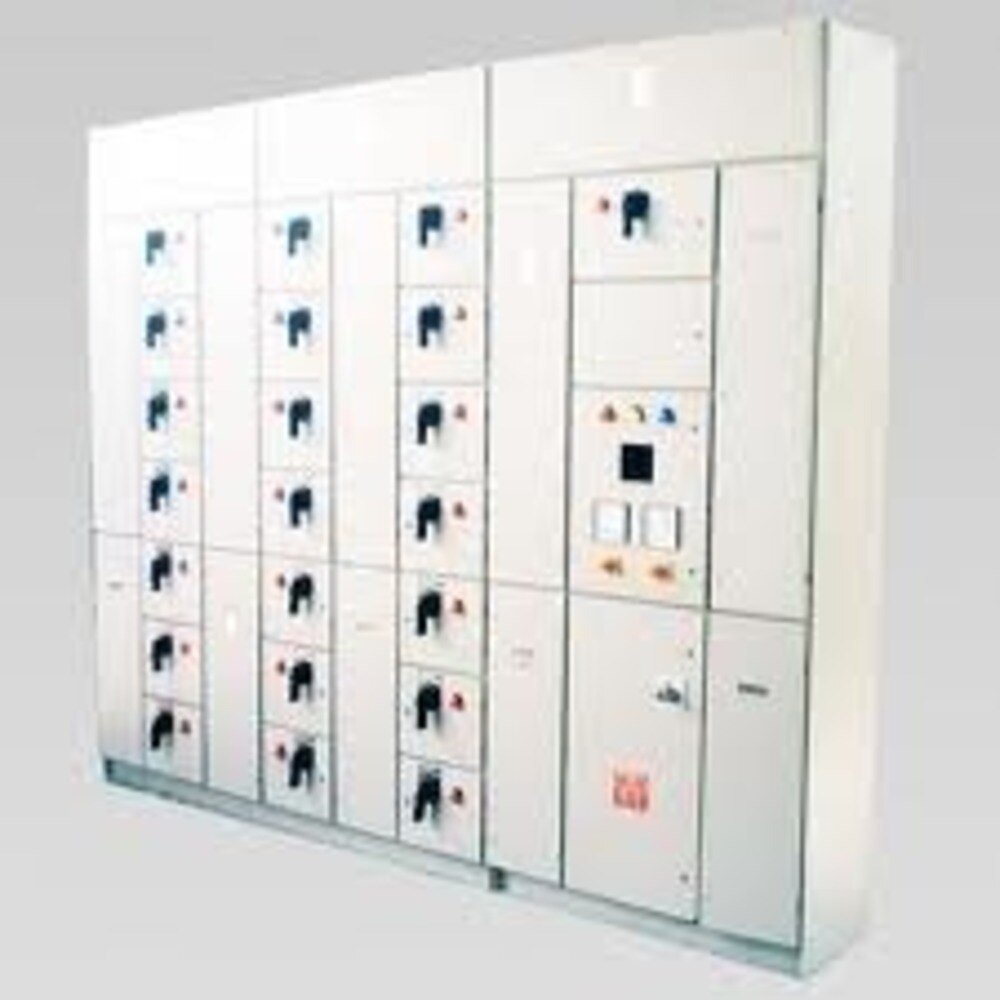
 | LT Distribution Panel We are successfully meeting the varied requirements of our clients by providing the best quality range of LT Control Panel. View product → |
Frequently asked questions
What information should you provide before selecting a three-phase LT control panel?
Define the system voltage, frequency, earthing system, load type and operating environment. IEC 61439 covers low-voltage assemblies up to 1,000 V AC or 1,500 V DC.
Which electrical ratings must appear in the purchase specification?
State the rated operational voltage, rated current, frequency, short-circuit withstand rating, incoming fault level and earthing arrangement.
What protection and metering details should you request?
Specify circuit breakers or fuses, overload and short-circuit settings, protection coordination, CT ratios, meter accuracy, control voltage and metering-circuit protection.
What construction details matter when comparing LT control panel suppliers?
Check busbar material and sizing, internal separation, enclosure IP rating, cable-entry location, gland-plate design, access clearances and heat dissipation.
Which documents and tests should an industrial control panel supplier provide?
Request general-arrangement and single-line diagrams, wiring diagrams, component schedules, IEC 61439 verification records and a witnessed factory acceptance test.