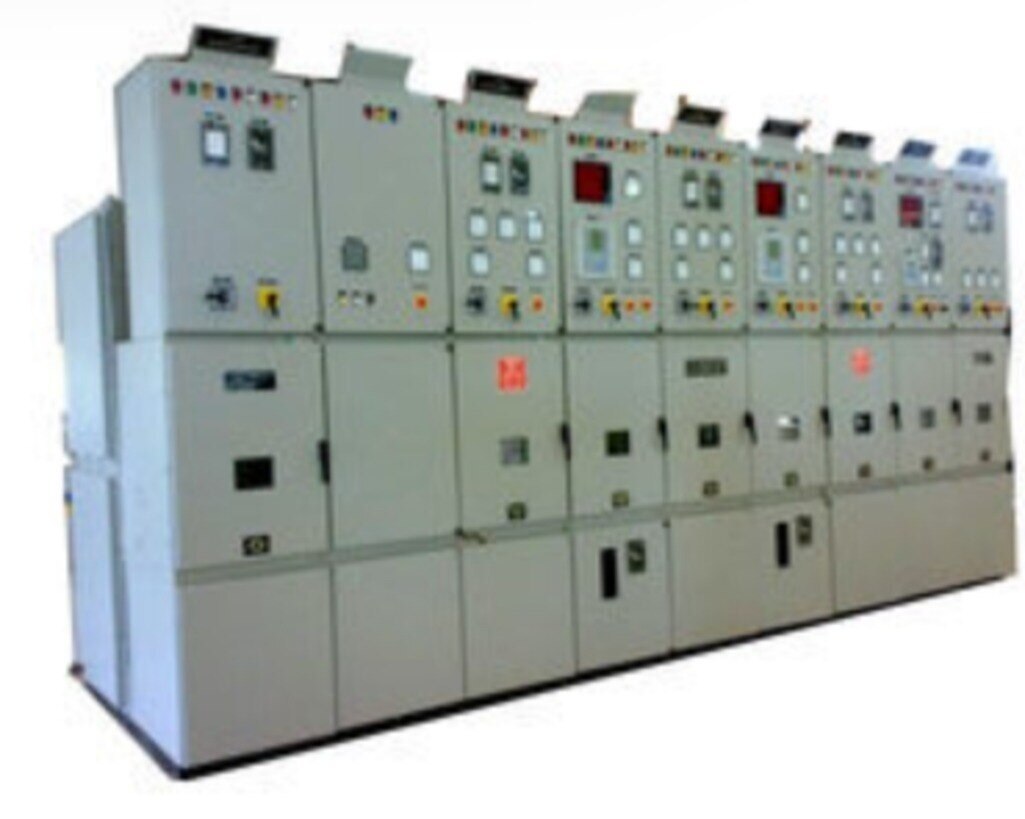
A metering panel is more than a breaker cabinet with a kWh meter mounted on the door. You need to identify every current and voltage transformer, test facility, protection device, busbar connection, cable-entry provision, and utility-sealing feature before comparing quotations or requesting energisation approval.
Key takeaways
- Match the panel layout to the utility-approved metering scheme.
- Specify CT and PT ratios, burden, class, and metering accuracy.
- Give the maker load data, fault level, cable details, and utility requirements.
- Require drawings, wiring checks, testing records, and approvals before energisation.
What a complete meter panel board includes
A complete meter panel board includes the revenue meter, measurement transformers, isolation, protection, terminals and safe cable access—not just a feeder breaker. The meter panel board inclusions should match the serving utility’s approved scheme and provide space for seals, inspection and maintenance.
- Revenue-meter compartment with a sealed test terminal block
- Metering CTs, CT shorting links, and PTs or VTs where required
- Secondary terminal blocks, HRC fuses or permitted miniature circuit-breakers, control fuses and labelled control wiring
- MCCB or ACB, busbars, neutral links, earth bars, surge protection and protection relays where specified
- Cable-termination space, gland plates, phase-identification markers, indicating lamps and selector switches
- Separate protective earthing, with accessible earth bars and continuity-tested connections
| Panel type | Measurement arrangement | Main equipment |
|---|---|---|
| LT 415 V panel | Meter connected on the low-voltage side through CTs, or directly where the approved current rating permits | MCCB or ACB, busbars, neutral link, CTs, meter and outgoing feeders |
| HT panel | Meter supplied through three metering CTs and three metering PTs or VTs, commonly for an 11 kV three-phase system | Medium-voltage cubicle, primary protection, cable or busbar termination, secondary fuses and sealed test facilities |
Show the single-line diagram in this order: incomer, metering CTs and PTs or VTs, secondary test block and meter, main protection, busbar, then outgoing feeders. Show CT polarity, VT polarity, phase sequence, neutral connections, earthing and every meter terminal.
A three phase metering distribution panel must not be specified by the word “three phase” alone; state the system voltage.
How LT and HT metering panels differ
Choose an LT metering panel for a 230/415 V supply, an HT metering panel for measurement on an 11 kV or other medium-voltage supply, and a dedicated HT metering cubicle when the utility requires sealed, separately accessible revenue metering.
| Option | What it means | When it applies |
|---|---|---|
| LT metering panel | Direct connection of the revenue meter to the low-voltage circuit, with CTs only when current exceeds the meter’s direct rating | A 415 V incomer feeds commercial or industrial loads |
| HT metering panel | A medium-voltage assembly using metering CTs and VTs/PTs, primary protection, test facilities and cable or busbar termination | The utility supplies the consumer at 11 kV or another HT voltage |
| Dedicated HT metering cubicle | A physically segregated, sealable metering section separated from switching and feeder compartments | The distribution licensee specifies restricted access, main/check meters or an approved backup scheme |
The phrase three phase metering distribution panel usually describes an LT 415 V panel. Do not treat “three phase” as proof that the equipment is low voltage; state the system voltage, fault level and utility connection arrangement.
An HT meter does not connect directly to an 11 kV circuit. Three metering CTs and three metering VTs/PTs, or an approved combined metering unit, reduce the values for the meter.
Ask an HT metering panel supplier to identify ownership and approval responsibility for the revenue meter, CTs, PTs, test block, modem and sealing hardware. The serving Delhi distribution licensee can reject a technically sound cubicle if its ratios, meter, terminal layout or sealing scheme does not match the approved specification.
How to specify CTs, PTs and metering accuracy
A 400/5 A CT is not automatically better than a 200/5 A CT. Select the primary ratio from the maximum demand, expected future load and utility-approved metering scheme, keeping normal current high enough within the CT’s rated range for accurate measurement.
State whether the secondary is 1 A or 5 A; do not leave this to the panel quotation.
1. Confirm the metering ratio and class with the distribution licensee. Revenue metering commonly requires a specified class such as 0.2S or 0.5S, while indication may accept a less stringent class. The meter’s accuracy depends on the complete circuit, not the CT label alone.
2. Calculate the burden in VA from the meter, test block, terminal links and secondary wiring. Include cable resistance at the actual route length. A CT rated 5 VA can lose accuracy when the connected burden exceeds 5 VA.
3. Specify protection CTs separately using the fault level and relay requirement. State 5P10, 5P20 or PX only after confirming the protection scheme; for a PX core, provide knee-point voltage, excitation current and secondary winding resistance. A low knee point can saturate during a fault and delay relay operation.
4. Require separate metering and protection cores. Metering cores prioritise accuracy around normal load and controlled saturation; protection cores reproduce high fault current. Combining both on one core can distort revenue readings or prevent dependable tripping.
Specify the VT/PT ratio, class, burden, fuses and phase arrangement as precisely as the CTs. Ask the HT panel manufacturer to identify each core, terminal, test facility and utility approval responsibility on the schematic and nameplate.
What information the buyer must give the panel maker
Give the panel maker a signed single-line diagram, utility metering specification, load schedule, and site layout before requesting a quotation. The serving New Delhi distribution licensee can reject a panel that has the wrong CT ratio, meter make, sealing points, terminal arrangement, or test facilities, even when the assembly follows IEC 61439.
Provide these details in writing:
- System voltage and frequency: 415 V LT or 11 kV HT; do not describe it only as “three phase”.
- Maximum demand, sanctioned load, fault level, incomer rating, outgoing feeder ratings, short-circuit withstand, and required discrimination.
- CT/PT ratios, accuracy class, burden, metering cores, protection cores, and whether the utility permits a combined metering unit.
- Indoor or outdoor location, ambient temperature, humidity, cable direction, gland-plate size, ventilation, anti-condensation heater, enclosure rating, and utility sealing arrangement.
- Meter communication protocol, remote-reading requirement, neutral earthing method, protection functions, and space for future feeders.
- Approved meter make, HRC fuse or MCB type, CT shorting links, sealed test terminal block, and inspection or witnessing requirements.
| Item | Meter panel board inclusions and design impact | Basic distribution board |
|---|---|---|
| LT | Direct meter or CT-operated meter, main breaker, busbars, test links, neutral and earth bars | Breaker, busbars and outgoing circuits |
| HT | CTs and PTs/VTs, primary protection, sealed secondary test facilities and terminations | Not suitable for 11 kV metering |
| HT panel manufacturer metering panel for inclusions in New Delhi | Match the licensee’s approved scheme and provide complete-assembly verification | Generic equipment list is insufficient |
Which drawings, tests and approvals to require before energisation
Obtain the serving Delhi distribution licensee’s approved metering scheme before releasing the purchase order. A generic IS/IEC compliance statement cannot prevent rejection of CT ratios, meter make, sealing points, terminal layout, or test facilities.
Request these documents from the HT panel manufacturer in New Delhi:
- Approved single-line diagram, general-arrangement drawing, control and metering schematic, terminal plan, cable-entry drawing, earthing layout, and panel foundation details.
- CT/PT or VT test certificates showing ratio, polarity, accuracy class, burden, insulation level, and test results; also request meter calibration or configuration data.
- Routine-verification records for the completed assembly, including insulation resistance, dielectric withstand, wiring continuity, CT secondary checks, earth continuity, terminal tightening, and functional interlock tests.
- Type or design-verification evidence for the applicable IEC 61439 low-voltage control and metering assembly. A breaker’s certificate does not verify the finished panel’s temperature rise, short-circuit withstand, segregation, or dielectric performance.
- Written confirmation identifying who supplies, owns, approves, seals, and replaces the revenue meter, CTs, PTs/VTs, test block, modem, and sealing hardware.
| Stage | Require before approval | Failure prevented |
|---|---|---|
| Manufacture | Utility-approved SLD, CT/PT schedule, GA, and sealing arrangement | Panel built to the wrong scheme |
| Delivery | Test records, calibration data, earthing results, and as-built drawings | Missing evidence at inspection |
| Connection | Licensee inspection, meter-sealing record, and energisation clearance | Rejection after installation |
An HT metering panel supplier should also state the enclosure IP rating, anti-condensation heater, outdoor canopy, and cable-entry treatment; IP rating alone does not prove outdoor suitability. Sneh Raman Electricals Pvt Ltd can be assessed on whether its quotation assigns these responsibilities instead of leaving them as scope gaps.
Related product
 | Meter Panel Board 3 - Phase Metering Distribution Panel Being a leader in the industry, we are engaged in offering a qualitative range of Metering Distribution Panel to our customers. View product → |
Frequently asked questions
What does a complete meter panel board include?
It includes the revenue meter, CTs and PTs, isolation devices, protection, terminals, cable access, sealing provisions, and maintenance space.
How do LT and HT metering panels differ?
LT panels measure on the low-voltage side, while HT panels use instrument transformers, high-voltage clearances, utility sealing, and safer isolation arrangements.
What should you specify for CTs, PTs, and metering accuracy?
Specify ratios, accuracy class, burden in VA, insulation level, polarity, metering and protection cores, and the approved utility scheme.
What information must a buyer give the panel maker?
Provide supply voltage, connected and maximum demand, fault level, transformer details, cable sizes, tariff metering requirements, site conditions, and utility documents.
Which documents and tests should you require before energisation?
Request approved single-line and wiring drawings, GA and terminal schedules, insulation and continuity results, CT/PT checks, meter test certificates, and utility inspection approval.