A quote that says only “500 kVA, 11/0.433 kV” leaves critical design and installation decisions unresolved. By the end, you will have a practical way to define capacity, compare transformer types and supplier offers, verify documents and tests, and prevent site or interface problems before placing an order.
Key takeaways
- Base transformer capacity on maximum demand, motor starts, harmonics and future expansion.
- Confirm voltage, impedance, vector group, protection and cable interfaces before manufacture.
- Approve certified drawings, standards, routine tests and special tests in the purchase order.
- Check transport route, foundation dimensions, clearances, earthing and commissioning access at site.
Build the transformer order schedule from the actual load
Send a firm quotation only after the load schedule reflects operating conditions, not merely connected nameplate load. A transformer contractor checklist must show maximum demand, diversity factor, power factor, motor-starting current, harmonic-producing drives or rectifiers, duty cycle and planned expansion.
Convert the demand to kVA using kW ÷ power factor, then add starting and future-load allowances; select kVA or MVA after checking voltage drop, heating and harmonic effects.
1. State the load basis: connected load, calculated maximum demand, diversity factor, minimum and peak loading, motor-starting sequence and current, nonlinear-load percentage, rectifier or variable-frequency-drive details, duty cycle and expansion date. A nominal “500 kVA, 11/0.433 kV” description is incomplete.
Check capacity against each item’s actual voltage and permitted voltage tolerance, not the nominal label alone.
2. Require the order schedule to specify primary and secondary voltage, highest system voltage, frequency, phase arrangement, winding connection, vector group, guaranteed percentage impedance and tolerance, tap range, normal tap position, and whether the changer is off-circuit or on-load. State insulation level, cooling method, temperature-rise limit, neutral arrangement and fault-duty basis.
3. Add installation conditions: altitude, design ambient temperature, indoor or outdoor location, ventilation, dust or pollution exposure and enclosure requirement. An industrial transformer manufacturer for contractor order details in New Delhi cannot price thermal performance accurately without these conditions; inadequate room ventilation can overheat a correctly rated unit.
A vague “tap changer provided” can also leave control wiring and operating limits unresolved.
Choose the transformer type and check every system interface
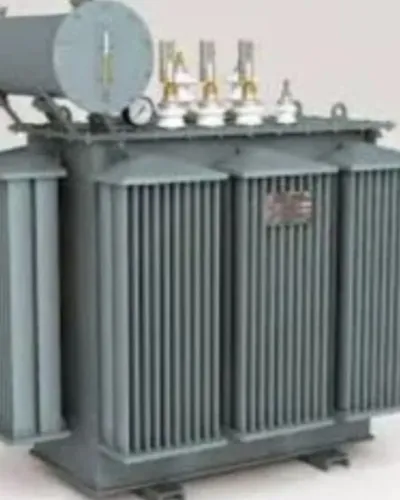
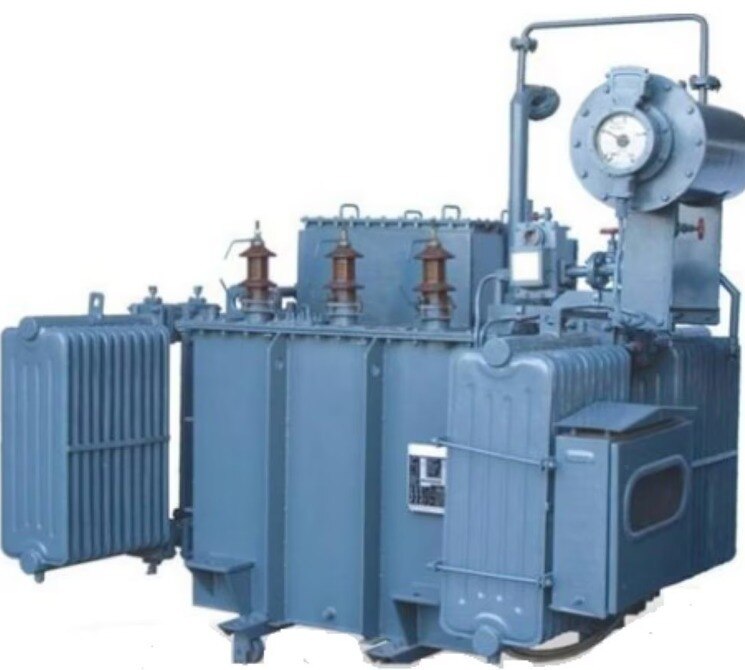
Oil-immersed units suit outdoor sites and higher ratings: they offer strong efficiency and short-circuit withstand, but require oil containment, fire separation, leak control and maintenance access. Dry-type units reduce fire risk and suit indoor installation, yet need ventilation, clearance, noise control and clean air; their footprint and cost rise when cooling and enclosure requirements increase.
| Option | Choose it when | Confirm |
|---|---|---|
| Oil-immersed distribution transformer | Stepping medium voltage down for plant loads | Fire separation, bund, cooling, impedance and access |
| Dry-type distribution transformer | Indoor fire-sensitive installation | Ventilation, temperature rise, noise, enclosure and clearances |
| Power transformer | High-capacity transmission or plant substation duty | Fault level, cooling stages, transport and protection |
| OLTC distribution transformer | Voltage varies during loading and supply must be corrected without interruption | Motor supply, control voltage, interlocks, tap indication, automatic control logic and maintenance access |
| Off-circuit changer | Infrequent voltage adjustment is acceptable | It operates only with the transformer de-energized |
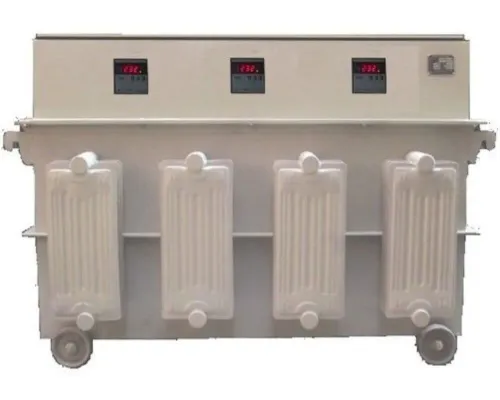
| Booster or regulating transformer | Feeder drop or a defined voltage correction is the problem | Control range, bypass, polarity and protection |
| Furnace transformer | Very high current, cyclic and distortion-heavy furnace duty | Harmonics, duty cycle, impedance and cooling |
Do not order a new transformer to cure feeder voltage drop, poor power factor, harmonic distortion, undersized cable, unstable utility supply or faulty protection coordination. Ask an industrial transformer manufacturer to verify the fault level, voltage regulation and load study before approving a distribution transformer order.
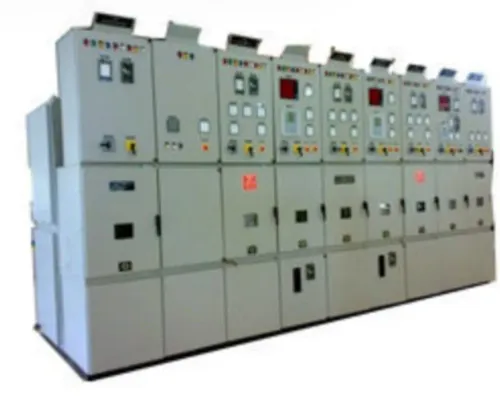
Check compatibility with breakers, CTs, PTs, busbars, cables, relays, generator synchronisation, metering, cable-entry direction and neutral arrangement. For parallel operation, match vector group, ratio, tap position, polarity, phase sequence, impedance and X/R ratio; equal kVA alone is insufficient. Specify panel short-circuit withstand, IEC 61439 assembly verification where applicable, IP rating, segregation, busbars and spare ways.
Freeze the drawings, standards and test requirements before manufacture
Do not release a distribution transformer order until the approved single-line diagram, load schedule, fault level, utility specification, site layout, earthing scheme, protection-coordination study, cable schedule, inspection requirements and applicable standard are frozen. The purchase order must name the governing project or utility specification, not leave it to the industrial transformer supplier in New Delhi.
IS 1180 applies to specified distribution transformers; the IS 2026 series is relevant to power transformers.
Require these supplier deliverables before manufacture:
- Guaranteed technical schedule, general-arrangement drawing, nameplate, wiring and terminal diagrams, loss schedule, impedance tolerance and factory inspection plan.
- Routine-test plan, type-test evidence where specified, calibration traceability and serial-numbered reports for the exact unit.
- Routine checks: ratio, polarity or vector group, winding resistance, insulation resistance, applied-voltage, induced-voltage, no-load loss and current, load loss, impedance, and leak or pressure testing where applicable.
- Type or special checks: temperature rise, lightning impulse, sound level and short-circuit withstand when the specification requires them.
| Standard | Use it for | Confirm in the purchase order |
|---|---|---|
| IS 1180 | Specified distribution transformers | Rating, efficiency, losses and required tests |
| IS 2026 series | Power transformers | Applicable part, insulation, tests and guarantees |
| Project or utility specification | Owner-specific requirements | The named revision and precedence over conflicting documents |
A generic test report from another batch is not acceptance evidence; match every report to the transformer serial number.
Confirm that the transformer can reach, fit and operate at the site
A technically correct transformer can still fail at the gate, on the plinth or inside the room. Freeze this transformer contractor checklist before manufacture: transport dimensions, shipping mass, oil quantity, centre of gravity, lifting and jacking points, wheel or skid arrangement, unloading method and permissible storage period.
1. Confirm New Delhi access for the actual vehicle: road width, turning radius, overhead clearance, transport permits, delivery timing and site security. Match crane capacity and reach to the shipping mass and centre of gravity.
Verify room access, plinth length, width and bolt pattern, ventilation, fire separation, oil containment, noise limit, and indoor or outdoor IP requirement.
2. Put every site duty in the purchase order. Name who handles factory delivery, unloading, positioning, erection, oil filling, vacuum treatment, cable termination, testing, commissioning and handover. State whether oil arrives filled or separately, and define storage protection against moisture and contamination.
3. Mark accessories as included or excluded: marshalling box, radiators, conservator, breather, Buchholz relay, pressure-relief device, temperature indicators, surge arresters, neutral-earthing equipment, wheels and tap-changer controls. Distinguish an off-circuit tap changer from an on-load unit; the latter needs motor supply, interlocks, tap indication and control wiring.
At delivery, record the nameplate and inspect for impact damage and leaks. Check silica gel condition, tap position, insulation readings, earth continuity, phase sequence, relay settings and the approved energisation procedure before connecting the transformer.
Compare supplier quotations on ownership cost, not just kVA
Select the lowest ownership cost only after forcing every bidder onto identical assumptions. An industrial transformer supplier in New Delhi must quote the same duty, site conditions, delivery scope and test evidence; a 500 kVA rating alone proves little.
| Comparison item | Record identically in every offer |
|---|---|
| Rating and system | kVA/MVA, primary and secondary voltage, frequency, phase, winding connection, vector group, fault level, harmonics and future-load allowance |
| Electrical performance | Percentage impedance, tap range and tap position, cooling, efficiency, guaranteed no-load and load losses, reference winding temperature and tap position |
| Transformer and panel scope | Oil specification, accessories, busbars, cable entry, metering, protection, spare ways and IEC 61439 assembly requirements where applicable |
| Assurance | Routine, type and special tests; inspection hold points; serialised reports and test evidence |
| Commercial scope | Freight, permits, unloading, crane, installation, oil filling, commissioning, warranty, spares and response obligations |
Calculate no-load and load-loss cost against the project’s operating profile when the specification requires capitalisation. A quote missing guaranteed losses, oil specification, tap range or test evidence is not commercially comparable.
- Price manufacturing slots, drawing approvals, inspection scheduling, transport permits, crane booking and site readiness; delays create rework and contractor labour.
- Reject omissions for fault level, harmonics or future load, and verify parallel-operation compatibility instead of matching kVA alone.
- Ask Sneh Raman Electricals Pvt Ltd to complete the same schedule and documentary questions as every competing bidder.
This approach also suits an industrial transformer manufacturer for contractor order details in New Delhi: identical technical and commercial assumptions keep the comparison valid.
Related products
 | ELECTRICAL TRANSFORMER, BOOSTER & REGULATING TRANSFORMER, FURNACE TRANSFORMER, INDRUSTRIAL DISTRIBUTION TRANSFORMER, CONTROL PANEL, VOLTAGE STABILIZER TRANSFORMER & ELECTRICAL PANELS Providing you the best range of Electrical Transformer, Booster & Regulating Transformer, Furnace Transformer and Industrial Distribution Transformer... View product → |
 | Transformer Being one of the renowned firms in the industry, we are involved in providing a high-quality array of OLTC Distribution Transformer. View product → |
Frequently asked questions
What should a contractor include in an industrial transformer load schedule?
Include connected load, maximum demand, diversity factor, power factor, motor-starting current, harmonic-producing drives or rectifiers, duty cycle and planned expansion.
Which transformer details must be checked against the electrical system?
Check primary and secondary voltage, frequency, rated kVA, impedance, vector group, tap range, neutral arrangement, earthing, protection, cable termination and downstream fault levels.
What should the contractor approve before transformer manufacture begins?
Approve the general arrangement drawing, single-line diagram, nameplate data, applicable standards, routine tests, type or special tests, inspection plan and documentation list.
How can contractors compare industrial transformer quotations fairly?
Compare purchase price with losses, maintenance, testing, delivery, installation, spares, warranty conditions, outage exposure and expected service life.