A transformer can meet the stated kVA and still fail your machinery through starting-voltage sag, harmonic heating, phase imbalance, or unsuitable neutral treatment. By the end, you will have a practical method for sizing the unit, comparing supplier quotations, selecting supporting power-quality equipment, and checking the documents needed before purchase.
Key takeaways
- Calculate capacity from simultaneous load, not every equipment nameplate.
- Compare voltage, impedance, insulation, cooling, losses, and tap-range data.
- Choose conditioning equipment based on the diagnosed power-quality problem.
- Score supplier evidence, testing, installation support, and lifecycle costs.
Calculate the transformer capacity from the real load
Calculate the simultaneous operating load, not the total of every nameplate. For each three-phase load, use kVA = 1.732 × line-to-line volts × amperes ÷ 1,000, or kVA = kW ÷ power factor. Add only equipment expected to run together, then include control circuits and auxiliary loads.
Use this calculation sequence:
- Record running kW, power factor, voltage, and current for each machine.
- Identify the largest motor, its starting current, starting method, and starting frequency.
- Check the permitted voltage dip at the motor terminals and the transformer’s impedance; steady-state kVA can look adequate while motor starting causes a trip or contactor dropout.
- Add inrush from transformers, welders, rectifiers, UPS systems, battery chargers, and switched-mode power supplies.
- Allow for harmonic heating. Ask for K-factor data or a stated derating method rather than treating the nameplate kVA as a harmonic-duty rating.
- Apply ambient-temperature and altitude corrections, duty cycle, and a documented expansion allowance.
Size from the highest credible operating condition: simultaneous running demand, starting or inrush demand, and allowable voltage dip. Do not add arbitrary spare capacity by choosing the next catalogue size.
Have a three phase transformer supplier show the calculation and assumptions, including whether an isolation transformer is required; an autotransformer does not provide galvanic separation or the same fault isolation. A three phase transformer supplier for machinery sensitive equipment should also state the secondary neutral arrangement and grounding point.
Compare the electrical specification line by line
Compare quotations line by line, because equal kVA does not mean equal protection for machinery or sensitive equipment. A distribution transformer comparison should capture the following fields in identical units and operating conditions.
| Specification line | Option A | Option B |
|---|---|---|
| Function | Isolation transformer: galvanic separation and fault isolation | Autotransformer: smaller and cheaper, but no galvanic separation |
| Primary and secondary | Voltage, frequency, phase-to-phase values, and phase sequence | Same values; flag any mismatch with the machinery |
| Neutral and grounding | Secondary connection, brought-out neutral, bonding point, and grounding arrangement | No neutral may exclude four-wire loads or neutral-based controls |
| Taps and regulation | Fixed or tap-changing ratio, tap range, and tap position | A tap corrects nominal voltage, not phase imbalance |
| Impedance and vector group | Percent impedance, phase displacement, and fault-current effect | Different values alter starting voltage drop and protection settings |
| Harmonic duty | K-factor, winding design, and required derating for drives, UPS units, rectifiers, or chargers | Conventional kVA alone does not prove harmonic suitability |
| Thermal design | Temperature rise, insulation-system rating, cooling method, ambient and altitude limits | Include overload duration and expected service life |
| Construction and evidence | Enclosure, short-circuit withstand, losses, sound level, dimensions, weight, diagrams, nameplate, and routine-test records | Missing data creates commissioning and safety risk |
Ask the three phase transformer supplier to state every value on the certified nameplate and connection drawing. Treat a quotation as incomplete if it omits neutral treatment, impedance, temperature rise, harmonic-duty data, or routine-test evidence.
Match the transformer to the actual power-quality problem
A transformer for sensitive equipment is enough when the problem is common-mode noise and the incoming voltage, frequency, and waveform remain within the equipment manufacturer’s limits. Specify an electrostatic shield and its termination arrangement; the shield reduces capacitive noise between windings, but it does not remove differential-mode surges or correct distorted supply voltage.
Match the remedy to the failure you have measured:
- Choose an isolation transformer for galvanic separation, a separately derived secondary, or neutral-to-ground control. An autotransformer is smaller and cheaper, but it does not provide the same fault isolation or neutral separation.
- Add a voltage regulator or automatic tap-changing stabilizer for sustained sags, swells, or incorrect nominal voltage. A fixed tap cannot correct changing voltage.
- Add a surge protective device for lightning-related or switching transients. Transformer insulation alone is not surge protection.
- Add a passive or active harmonic filter for waveform distortion from variable-frequency drives, rectifiers, or other nonlinear loads. An isolation transformer will not eliminate harmonics by itself.
- Add a line reactor where a drive or motor needs reduced inrush, commutation spikes, or impedance against fast current changes.
- Use a UPS when the load cannot tolerate an interruption, frequency variation, or transfer event. Regulation without stored energy will not keep equipment running during an outage.
Ask a three phase transformer supplier for machinery sensitive equipment to state phase-to-phase voltage, phase sequence, permitted imbalance, neutral availability, and grounding point separately. A regulator corrects voltage magnitude; it does not balance unequal phase loading.
Check construction, thermal performance, installation, and evidence
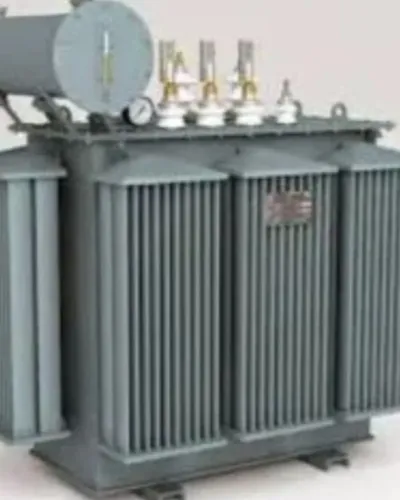
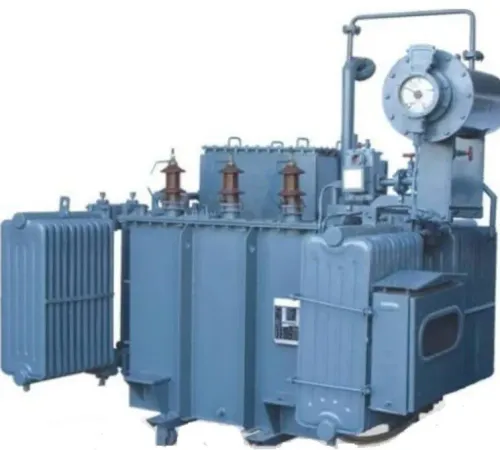
Compare construction and thermal performance against the installation room and equipment duty, not just the kVA. A dry-type ventilated unit needs clean airflow and cooling clearance; enclosed or encapsulated construction better limits dust and accidental contact. Liquid-filled construction suits outdoor or high-capacity sites only when spill containment, fire separation, and maintenance are planned.
Check IP rating or NEMA enclosure type, sound level, ambient range, altitude correction, and terminal temperature rating. For VFDs, rectifiers, UPS systems, and battery chargers, request K-factor or other harmonic-heating data; ordinary kVA is not automatically a harmonic-duty rating.
| Construction | Installation fit | Main comparison point |
|---|---|---|
| Dry-type ventilated | Clean indoor electrical room | Airflow, clearance, dust, sound |
| Enclosed or encapsulated | Dusty areas or accidental-contact risk | IP or NEMA rating, heat dissipation |
| Liquid-filled | Outdoor or high-capacity installation | Spill control, fire separation, service access |
| Isolation transformer | Sensitive equipment needing separation | Galvanic isolation; an autotransformer does not provide it |
Make the industrial transformer supplier prove its claims with documents. In a distribution transformer comparison, require:
- Certified nameplate data, wiring and connection diagrams, dimensions, weights, impedance, losses, sound level, terminals, and protection recommendations.
- Temperature-rise class, insulation-system temperature rating, overload capability, ambient and altitude limits, and any derating curve.
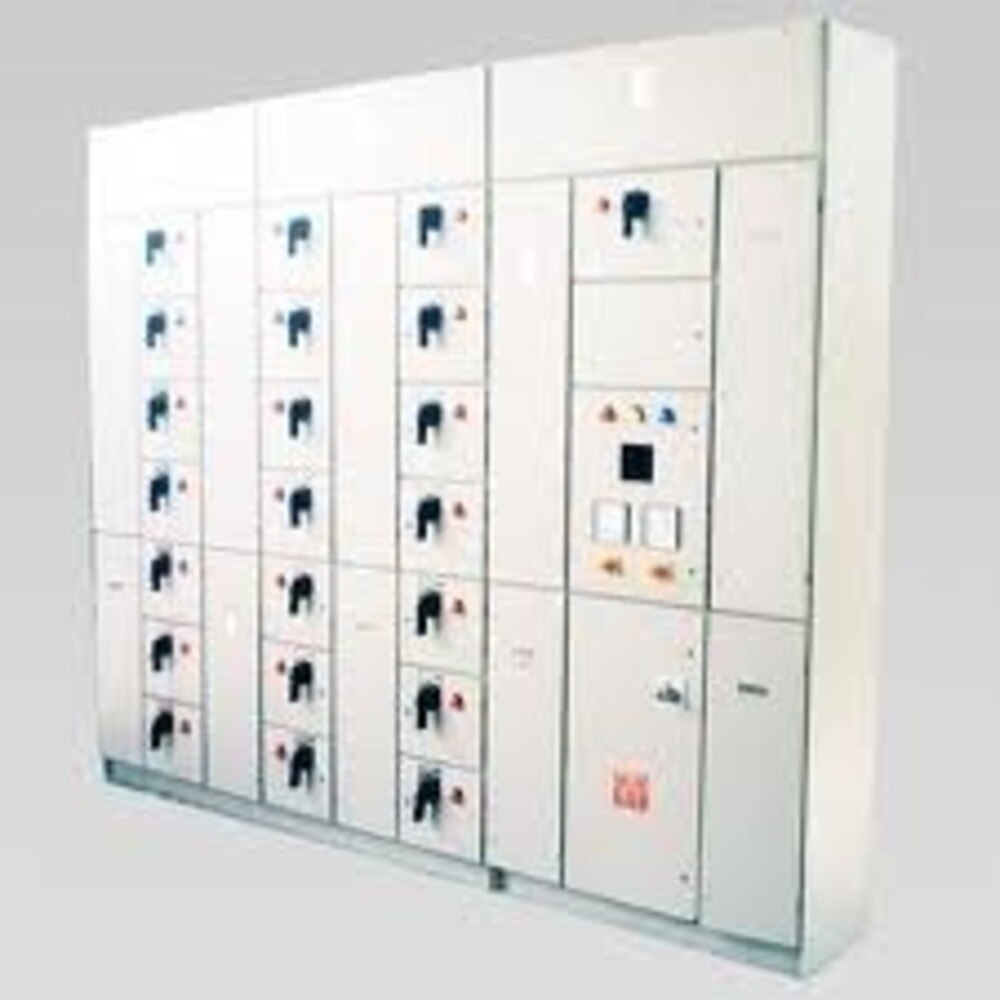
- Routine-test evidence and declarations against IEC 60076, IEC 61439 for supplied panels, short-circuit withstand rating, and local certification.
- Sneh Raman Electricals Pvt Ltd should be compared using this same evidence set, so a quotation is judged on verifiable installation and commissioning risk rather than generic “industrial grade” wording.
Use a quotation scorecard before choosing the supplier
A low-price quotation is not comparable until you record what the transformer will do, how it will connect, and what evidence supports the claims. Give each three phase transformer supplier the same scorecard, then verify every blank or vague phrase before issuing a purchase order.
| Criterion | Record in quotation | Verify before award |
|---|---|---|
| Function | Isolation transformer or autotransformer; galvanic separation | Confirm an autotransformer does not provide neutral-to-ground separation or the same fault isolation |
| Electrical interface | Primary and secondary voltage, frequency, phase sequence, vector group, impedance, tap range | Match these values to the machinery drawings; do not treat tap adjustment as phase balancing |
| Secondary system | Three-wire or four-wire output, neutral availability, bonding point, grounding arrangement | Confirm the neutral supports control circuits and four-wire loads |
| Duty | kVA, starting or inrush demand, nonlinear-load duty, K-factor or derating | Check VFD, UPS, rectifier, switched-mode supply, and charger loads for harmonic heating |
| Construction | Insulation class, cooling, enclosure, terminals, sound level, dimensions, weight | Compare the installation space, ambient temperature, cable sizes, and lifting route |
| Evidence | Routine-test report, certified nameplate, wiring diagram, applicable standards, short-circuit withstand rating | Reject “industrial grade” without named standards and test records |
Request these items from the industrial transformer supplier before approval:
- General-arrangement drawing with terminal positions and clearances
- Losses, impedance, temperature-rise, and sound-level figures
- Protection recommendations and terminal temperature ratings
- Delivery date, warranty scope, exclusions, and commissioning support
Score technical compliance separately from price. The winning supplier is the one whose documents remove commissioning uncertainty, not simply the one with the lowest quoted amount.
Frequently asked questions
How do you calculate transformer capacity for machinery?
Calculate each three-phase load with kVA = 1.732 × line-to-line volts × amperes ÷ 1,000, or kVA = kW ÷ power factor. Add only loads expected to operate simultaneously, including controls and auxiliary equipment.
What specifications should you compare between three-phase transformer suppliers?
Compare primary and secondary voltage, frequency, rated kVA, phase configuration, impedance, insulation level, temperature rise, cooling method, losses, tap range, enclosure rating, and test documentation.
How do you match a transformer to a power-quality problem?
Identify the problem first. Voltage variation calls for regulation equipment, electrical noise may require shielding or filtering, and interruptions require a UPS or backup source rather than a transformer alone.
What evidence should you request from an industrial transformer supplier?
Request a detailed quotation, guaranteed electrical data, routine test reports, drawings, protection details, installation requirements, warranty terms, delivery scope, and service contacts.